

How to Buy a Reconditioned Car in Sri Lanka: The Complete 2026 Guide, will provide you all the neccesary information to buy an used car in Srilanka. For many buyers, choosing a reconditioned (used) vehicle rather than a brand-new one makes financial sense but the process can feel risky if you don’t know what to look for.
This guide walks you through everything you need to know before purchasing a reconditioned car in Sri Lanka in 2026, including how to evaluate vehicle condition, negotiate pricing, understand financing options, and avoid common pitfalls.
What Does “Reconditioned” Mean in Sri Lanka?
In the Sri Lankan automotive market, “reconditioned” or “used” cars typically refer to vehicles that have been previously owned and have accumulated mileage. A truly reconditioned vehicle often goes through inspection, minor repairs, and detailing to restore it closer to showroom condition.
The distinction matters: a car with 50,000 km that’s been well-maintained can perform nearly as well as a new vehicle while an older car with high mileage may require more attention.
Step 1: Determine Your Budget and Financing
Before browsing inventory, know your budget. In Sri Lanka’s market, reconditioned vehicles typically cost 30-60% less than their new counterparts, depending on age, mileage, and condition.
Budget considerations:
Down payment: Most dealers in Sri Lanka require 15-30% down
Loan terms: Typical auto loans run 24-60 months with interest rates between 8-14% (2026 rates)
Monthly payment: Use a loan calculator to understand your actual commitment don’t just focus on the sticker price.
Hidden costs: Budget for registration, insurance, maintenance, and fuel
Financing tip: Get pre-approved for a loan through a bank or finance company before visiting dealerships. This gives you negotiating power and clarity on what you can afford.
Step 2: Choose the Right Vehicle for Your Needs
The Sri Lankan climate and road conditions influence which vehicles hold up best over time.
Consider these factors:
Fuel type: Petrol engines are more common and easier to service in Sri Lanka; diesel is economical for long-distance driving.
Transmission: Automatic transmissions are increasingly popular but more expensive to repair; manual transmissions are cheaper to maintain.
Body type: SUVs and sedans dominate the market; commercial vehicles (vans, lorries) serve different purposes.
Reliability rating: Toyota, Honda, and Nissan models tend to have strong track records in Sri Lanka’s climate.
Age and mileage: A 3-5 year old car with 50,000-80,000 km is usually a sweet spot for value and reliability.
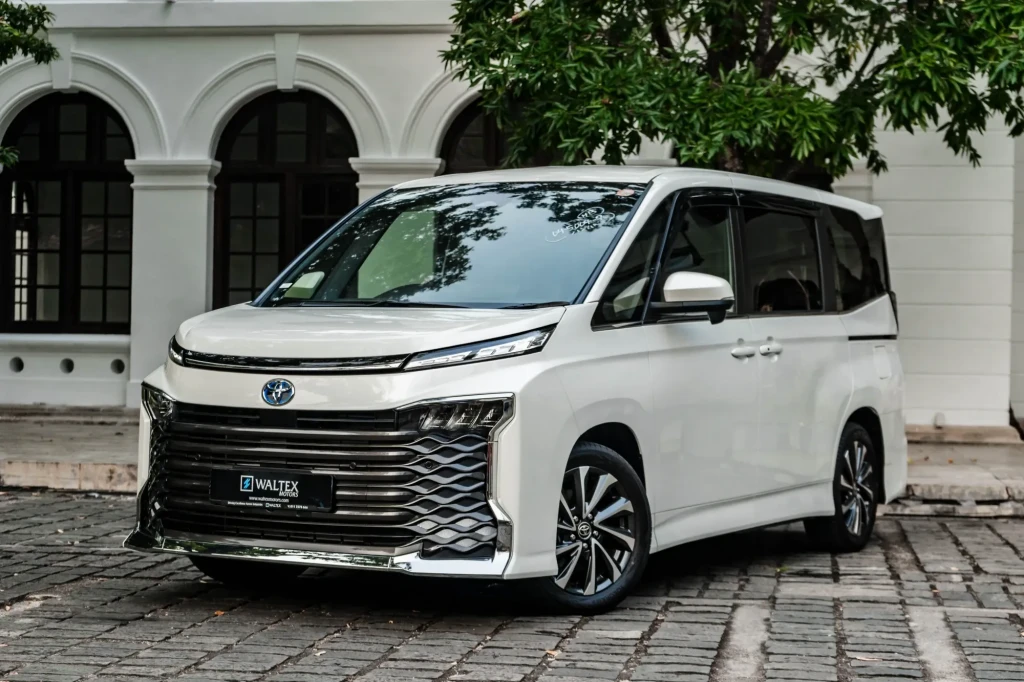
Popular reconditioned models in Sri Lanka include Toyota Corolla, Honda Accord, Nissan X-Trail, Toyota Voxy, and Toyota Roomy.
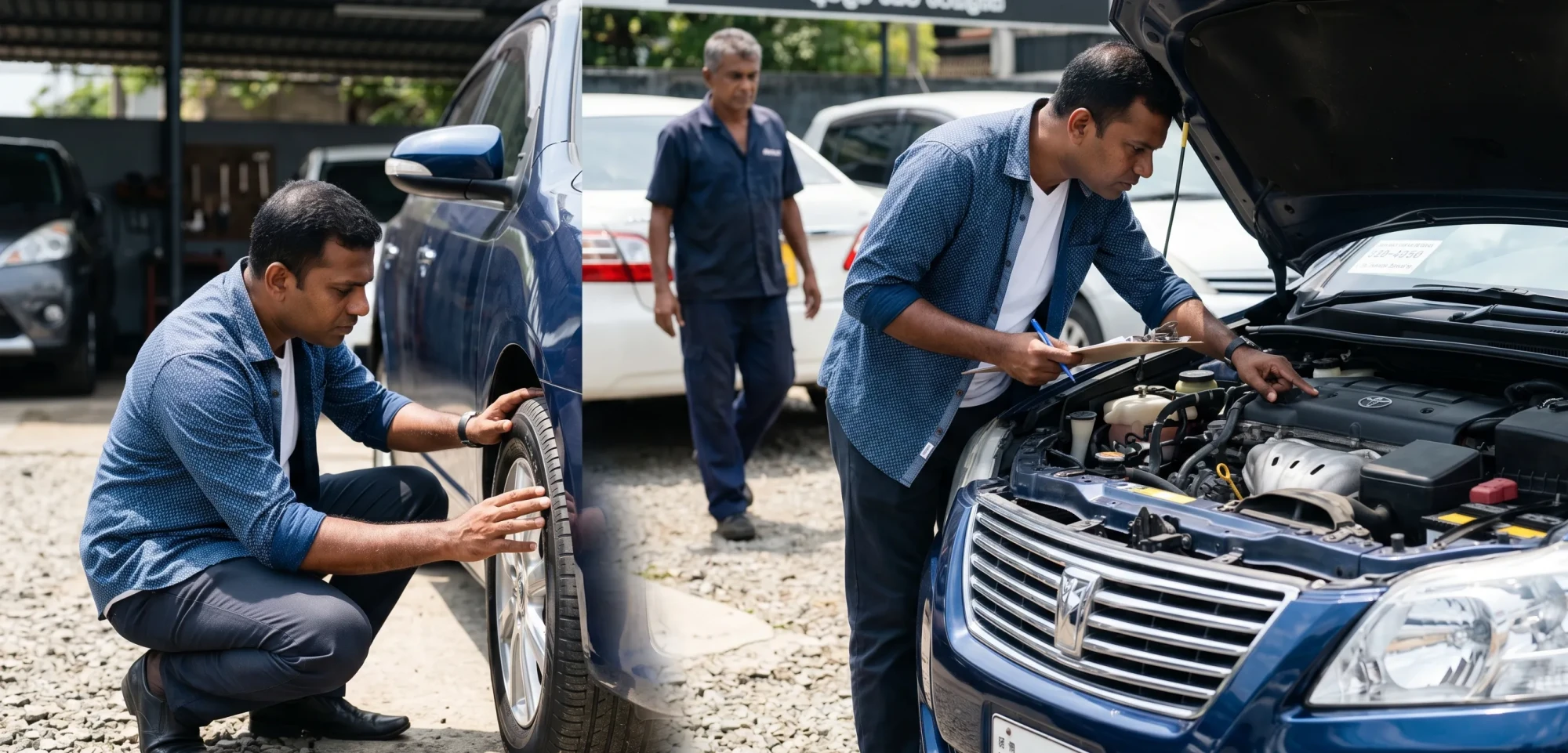
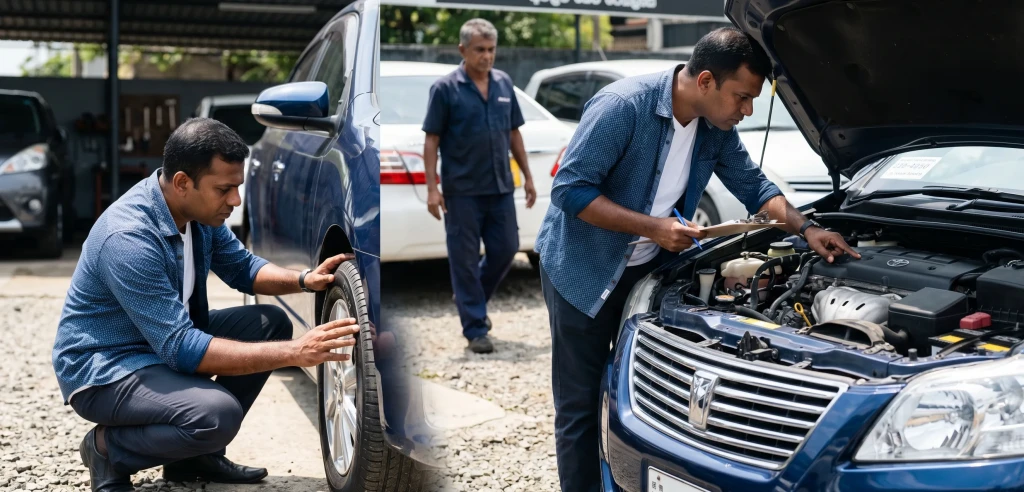
Step 3: Inspect the Vehicle Thoroughly
This is where most buyers either gain confidence or uncover problems. A proper inspection takes 30-45 minutes and covers multiple systems.
Exterior inspection:
Check for rust, dents, or poorly matched paint (signs of accident damage)
Inspect tires for tread depth and even wear (uneven wear suggests suspension issues)
Look for fluid leaks under the vehicle
Test all lights (headlights, brake lights, indicators)
Open and close all doors and windows to ensure they operate smoothly
Interior inspection:
Check that all dashboard warning lights work
Verify air conditioning and heating systems function
Test power windows, locks, and seats
Look for excessive wear on the steering wheel, pedals, and seats (signs of high actual mileage)
Inspect the odometer reading against service records
Engine and mechanical:
Start the engine and listen for unusual noises (knocking, grinding, squealing).
Check fluid levels (oil, coolant, brake fluid).
Inspect hoses and belts for cracks or deterioration.
Review the service history regular maintenance is a green flag.
Pro tip: If you’re not mechanically inclined, hire a trusted mechanic to perform a pre-purchase inspection (typically LKR 2,000-5,000). It’s money well spent.
Step 4: Review the Vehicle’s History and Documentation
In Sri Lanka, verify the following documents before purchase:
Log Book (Deed of Transfer): Confirms legal ownership and registered owner details
Insurance history: Check if the vehicle has a clean claims history
Service records: Regular maintenance records indicate responsible ownership
Mileage records: Cross-reference claimed mileage against service history and the odometer
Customs clearance: For imported reconditioned vehicles, ensure proper import documentation
Red flags:
Multiple owners in a short period (suggests chronic problems)
No service records
Mismatched log book details
Insurance claims for major accidents
Step 5: Get a Pre-Purchase Inspection Report
Professional inspection reports have become standard in Sri Lanka’s reconditioned car market. Reputable dealerships often provide these; private sellers may resist.
A comprehensive inspection report should cover:
Engine condition and diagnostic scan
Transmission functionality
Braking system integrity
Suspension alignment
Electrical systems
Air conditioning performance
Overall safety rating
Step 6: Negotiate the Price
Reconditioned car prices in Sri Lanka are typically negotiable—especially from private sellers or independent dealers.
Negotiation strategies:
Research the fair market value using comparable vehicles (check local dealer websites and classified ads)
Use the inspection report to justify price reductions (e.g., “Tires need replacement—that’s LKR 50,000”)
Be prepared to walk away if the price doesn’t align with condition
Negotiate total out-the-door price, including registration and dealer fees
Ask about warranty coverage (even if limited, it provides recourse for major defects)
Step 7: Understand Warranty and After-Sales Support
Most reconditioned vehicles in Sri Lanka come with limited warranties (typically 3-6 months on mechanical systems). Some dealers offer extended warranty options.
What to ask:
What does the warranty cover (engine, transmission, electrical)?
What’s the procedure if something fails during the warranty period?
Is roadside assistance included?
Does the dealer provide free servicing during the warranty?
Step 8: Complete the Purchase and Registration
Once you’ve agreed on price and inspected the vehicle:
Draft a sales agreement specifying the vehicle details, price, condition, and warranty terms
Transfer the log book at the Registrar’s Office with both buyer and seller present
Update vehicle insurance in your name before driving off the lot
Complete registration renewal if the vehicle hasn’t been re-registered recently
Keep all documentation including the inspection report, sales agreement, and warranty details
Typical costs (2026):
Log book transfer: LKR 2,000-5,000
Vehicle registration: LKR 3,000-8,000 (depends on engine capacity)
Insurance: LKR 8,000-20,000+ annually
Common Mistakes to Avoid
Skipping the inspection: Never buy based on appearance alone.
Ignoring service history: A well-maintained car with 100,000 km can outlast a neglected car with 50,000 km.
Overlooking mileage: High mileage is expensive—future maintenance costs rise significantly.
Buying from untrusted sellers: Reputable dealerships offer some recourse; private sales usually don’t.
Accepting high-pressure sales tactics: Take your time; good deals will still be there tomorrow.
Financing more than necessary: Don’t stretch your budget; you need money for maintenance and emergencies.
Choosing the Right Dealership
Reputable dealerships in Sri Lanka like Waltex Motors differentiate themselves through:
Transparent pricing (no hidden fees)
Comprehensive pre-sale inspections
Clear warranty policies
Professional customer service
Financing assistance
After-sales support and genuine spare parts
A trustworthy dealership will answer all your questions, provide documentation, and stand behind their vehicles.
Final Checklist Before You Buy
✓ Budget confirmed and pre-approved financing arranged
✓ Vehicle meets your practical needs
✓ Professional inspection completed with no major red flags
✓ All documentation verified (log book, service history, insurance)
✓ Fair market price confirmed through research
✓ Warranty terms and coverage understood
✓ Mechanic or trusted advisor approves the vehicle
✓ Registration and insurance plans finalized
Conclusion
Buying a reconditioned car in Sri Lanka doesn’t have to be stressful. By following these steps budgeting carefully, inspecting thoroughly, verifying documentation, and negotiating fairly you can find a reliable vehicle that offers great value.
The key is patience and due diligence. Take your time, ask questions, and never rush into a purchase. A reconditioned car from a trusted dealership can serve you reliably for years to come.a Reconditioned Car in Sri Lanka: The Complete 2026 Guide,
Down payment: Most dealers in Sri Lanka require 15-30% down
Loan terms: Typical auto loans run 24-60 months with interest rates between 8-14% (2026 rates)
Monthly payment: Use a loan calculator to understand your actual commitment—don’t just focus on the sticker price
Hidden costs: Budget for registration, insurance, maintenance, and fuel
Financing tip: Get pre-approved for a loan through a bank or finance company before visiting dealerships. This gives you negotiating power and clarity on what you can afford.
The key is patience and due diligence. Take your time, ask questions, and never rush into a purchase. A reconditioned car from a trusted dealership can serve you reliably for years to come.
a Reconditioned Car in Sri Lanka: The Complete 2026 Guide. Waltex Motors. 2026.